Where Growth Quietly Stalls
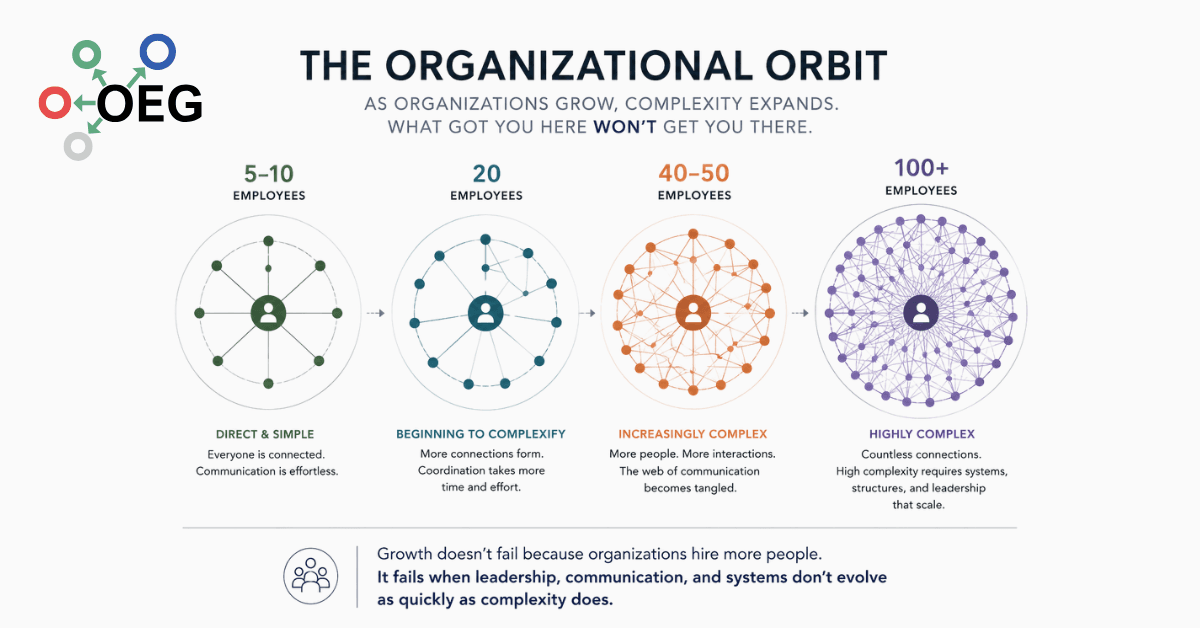
The systems that support one stage of growth rarely support the next. As organizations scale, they must continually evolve their leadership, structures, processes, and ways of working to keep pace with increasing complexity.
3 Signs Your Organizations Has Outgrown the Way It Used to Work
One of the biggest misconceptions about growth is that it simply means adding more people. In reality, what growth actually changes is how an organization needs to operate.
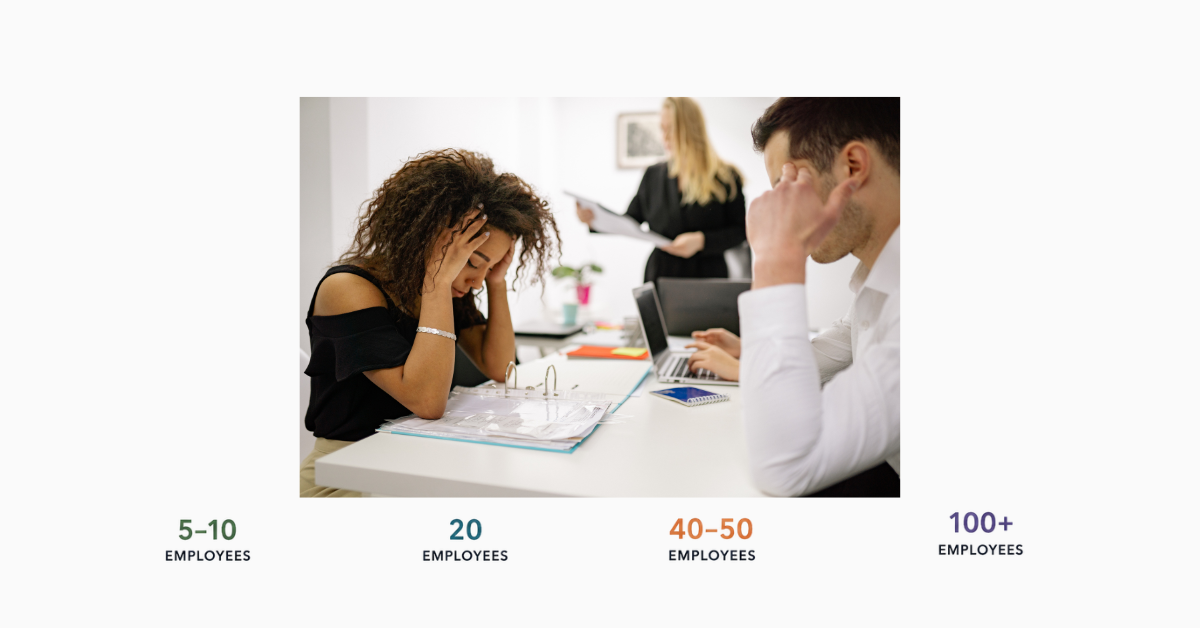
The practices that worked when you had 5 or 10 employees often begin to strain once you reach about 20. Then what worked at 20 starts to break down at 40 or 50. Every stage of growth creates new demands, requiring organizations to rethink how they structure work, develop leaders, share knowledge, and adopt new ways of working.
Interestingly, organizations rarely describe the problem this way. Instead, they say things like:
"We're constantly answering the same questions."
"Our new managers are struggling."
"We invested in new software, but no one is using it properly."
At first glance, these seem like separate issues. In my experience, they're often symptoms of the same thing: the organization has reached a new stage of growth, but its workforce capability hasn't evolved at the same pace.
At OEG, here are three of the most common patterns reported to us when clients sign up for workforce capability upskilling:
1. The Onboarding Wall
Many growing organizations still rely on informal knowledge sharing. For example, a new employee shadows whoever happens to be available. Questions are answered differently depending on who is asked. Processes exist in conversations, emails, and individual experience rather than in a consistent approach.
None of this feels like a problem—until the organization grows.
Suddenly, onboarding becomes inconsistent, productivity takes longer than expected, and experienced employees spend an increasing amount of time answering the same questions.
A simple question I often ask is this:
If the person who normally trains new employees took a two-week vacation tomorrow, could someone else confidently deliver the same onboarding experience?
If the answer is uncertain, the challenge isn't the people. It's that the organization has outgrown informal knowledge sharing.
The shift isn't about creating more documentation for the sake of documentation. It's about building repeatable systems that help every new employee succeed.
2. The Promotion Cliff
Promoting great people is usually a sign of a healthy organization. The challenge is that being excellent at the work isn't the same as leading others who do the work.
New managers often continue solving technical problems themselves because it's faster than coaching someone else. Team members wait for decisions. Senior leaders find themselves stepping back into situations they expected new managers to handle independently.
Here's the question worth considering:
If you promoted your strongest employee into a leadership role tomorrow, would they know how to mobilize, engage, and develop people—not simply perform the work themselves?
Leadership capability doesn't automatically come with a promotion. It needs to be developed intentionally.
3. The Tool Nobody Opens
Organizations have never had more access to technology.
AI platforms, workflow tools, collaboration software, and automation solutions promise significant gains in productivity.
Yet many organizations quietly discover that the biggest challenge isn't selecting the right technology. It's helping people adopt it and adapt to it.
When employees continue using spreadsheets alongside new systems, or quietly return to familiar processes after a rollout, that “demo” you showed them wasn’t “training.”
Ask yourself:
Looking at your current software and AI subscriptions, could you confidently identify which tools your team uses consistently—and which have quietly been abandoned?
Buying technology is an investment. Building the capability to use it effectively is what creates value.
These Are NOT Three Separate Problems
In fact, we often see the onboarding wall, promotion cliff, and tool nobody opens appearing together:
Knowledge is still being shared informally.
People are promoted into leadership without the support to succeed.
Technology is introduced before employees are prepared to use it effectively.
Taken individually, each issue seems manageable. Together, they reveal something more important: The organization must share knowledge, develop leaders, and adopt new ways of working if the next phase of growth is to be scalable and resilient.
When Hiring More People Isn’t the Answer
The instinct when organizations feel stretched is often to hire. Sometimes that's exactly the right decision.
But just as often, the greater opportunity lies in unlocking the potential of the people already on the team. That’s where OEG can help.
When people, processes, and technology evolve together, organizations become more productive, more resilient, and better prepared for sustainable growth.
That's the foundation of workforce capability.
At OEG, every engagement begins with a Skills Gap Analysis to understand where capability is breaking down and where the greatest opportunities for improvement exist.
Because lasting growth isn't built by adding more complexity. It's built by helping your people perform at their full potential.
#OEG #OttawaEducationGroup #upskilling #corporatetraining #training #workforcecapability #FutureOfWork #employeeretention #workforceresilience
About the Author
Harry Sharma, President and COO, Ottawa Education Group
Harry is an innovation and technology leader with more than 20 years of experience driving organizational growth, developing high-performing teams, and advancing entrepreneurship. Drawing on his engineering background and management expertise, he has designed innovation programs, secured investment, and mentored hundreds of business ventures, helping create lasting socio-economic impact.