Why Writing by Hand Still Matters in an AI-Powered Workplace
Reading a meeting summary after the fact is fundamentally different from actively engaging with ideas while they are unfolding. Writing—even briefly—forces us to prioritize, interpret, connect, and question.

As organizations continue integrating AI into everyday work, it's becoming easier than ever to capture information without lifting a pen. Meetings are transcribed automatically. Action items appear in our inboxes within minutes. AI-powered tools summarize conversations, organize notes, and retrieve information almost instantly.
So why would anyone still write notes by hand?
It's a fair question—and one that's becoming increasingly relevant as organizations embrace AI to improve productivity.
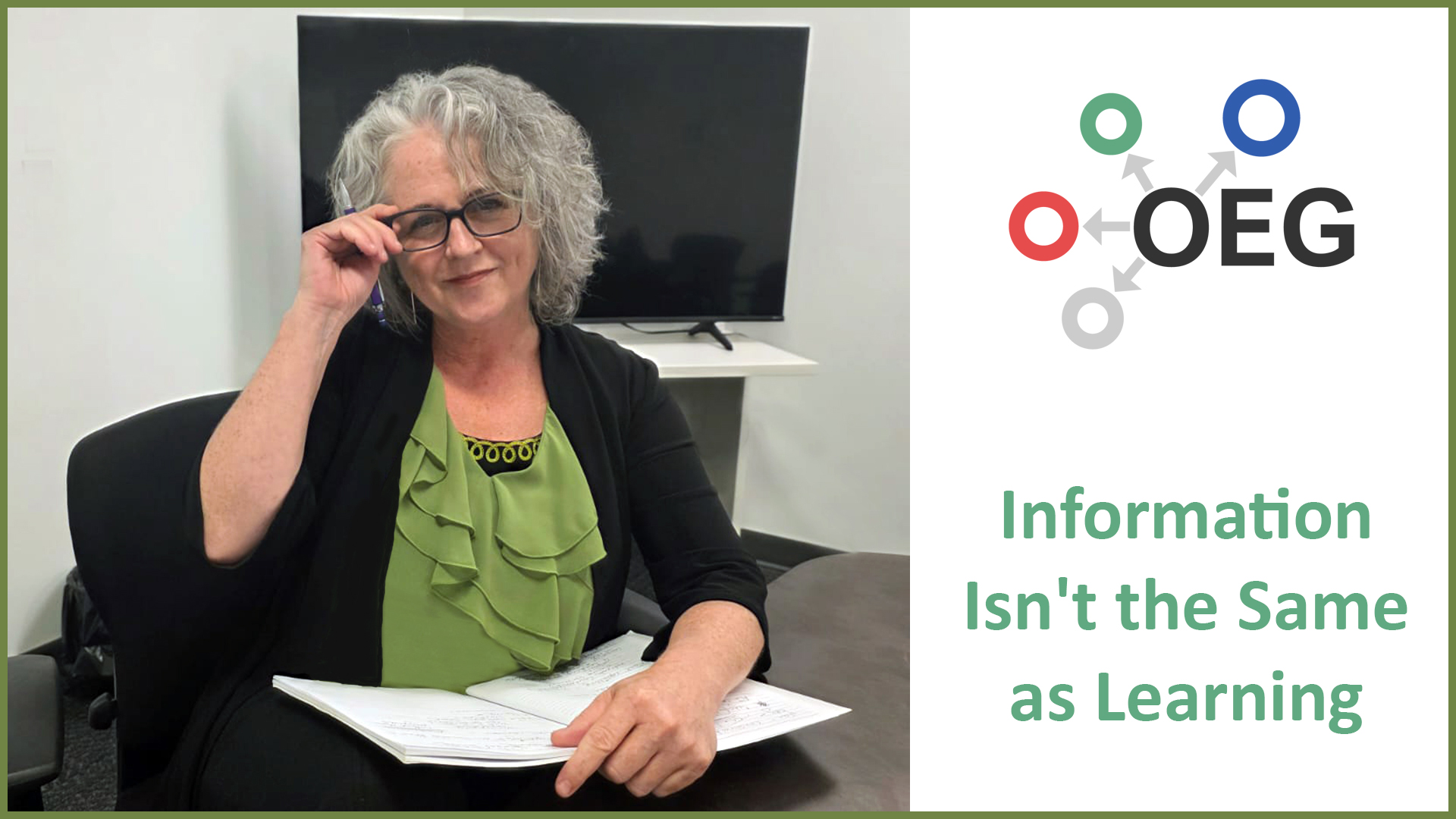
Andrée Paige shares her thoughts ...
Information Isn't the Same as Learning
Recently, someone noticed I was taking handwritten notes during a meeting where an AI assistant was already recording the discussion.
"The summary will be in your inbox in a minute," they reassured me. "You don't need to write anything down."
Except, for me, I do.
Not because I don't value AI-generated summaries. In fact, I recommend them often. They save time, improve consistency, and reduce the administrative burden that so often follows meetings.
But handwriting serves a different purpose: It isn't about storing information. It's about processing it.
The Difference Between Capturing and Creating Understanding
The act of taking notes helped us retain and later reference information. As we listened, selected what mattered, summarized ideas in our own words, and connected concepts together, we weren't simply recording information ... we were processing it!
That process strengthened the neural pathways that support learning, memory, and recall. And today, that distinction still matters more than ever.
AI Can Capture Information. Humans Still Need to Process It.
One of AI's greatest strengths is information capture:
It doesn't forget details.
It produces accurate transcripts.
It identifies action items.
It summarizes discussions in seconds.
Those capabilities are remarkable and organizations should absolutely take advantage of them. But summaries are not the same as learning.
Reading a meeting summary after the fact is fundamentally different from actively engaging with ideas while they are unfolding. Writing—even briefly—forces us to prioritize, interpret, connect, and question.
Those cognitive processes help transform information into understanding and understanding into better decisions.
Building Workforce Capability Requires More Than Technology
At Ottawa Education Group, we often speak about workforce capability rather than simply workforce development. Why? Because information alone doesn't build capability.
Instead, capability develops when individuals actively engage with new ideas, apply them in meaningful ways, reflect on what they've learned, and build confidence through practice. In other words, learning by doing and retaining by experiencing.
AI can accelerate many parts of that journey, but it cannot replace it.
The most effective organizations won't ask whether AI or humans should perform a task. They'll ask how technology can enhance uniquely human capabilities such as critical thinking, communication, judgment, creativity, and problem-solving.
What the Research Tells Us
The neuroscience behind handwriting continues to support what many people intuitively experience.
Researchers have found that writing by hand encourages deeper cognitive processing than simply reading or transcribing information. Handwriting requires us to slow down, summarize, and organize ideas. It also strengthens memory, comprehension, and recall.
This doesn't mean everyone should abandon digital tools. The real opportunity lies in combining the strengths of both.
It's Not About Nostalgia
This isn't an argument against AI. Nor is it an argument that everyone should fill notebooks the way previous generations did. Technology continues to reshape how we work, and many of those changes are unquestionably positive.
The real question is whether, in our pursuit of efficiency, we unintentionally eliminate the very activities that strengthen human capability. Sometimes the fastest way to capture information isn't the best way to learn from it.
The Human Advantage
As organizations continue adopting AI-powered tools, leaders should think beyond productivity alone.
Information capture is becoming increasingly automated. Learning, judgment, creativity, and critical thinking are not.
The future of work belongs to organizations that intentionally develop both technological capability and human capability—understanding when to rely on algorithms for speed and when to engage people in the deeper thinking that drives innovation, sound decisions, and long-term organizational success.
If your organization is exploring how to strengthen workforce capability in the Intelligence Age, Ottawa Education Group offers practical workforce capability pathways that help leaders and teams develop the human skills technology cannot replace—from communication and critical thinking to AI adoption, leadership, and organizational effectiveness.
Because lasting workforce capability isn't built by technology alone. It's built by people who know how to use it well.
#Neuroscience #CognitivePerformance #ProductivityTips #AugmentedIntelligence #HumanFirstTech #ExecutiveCommunication
Sources:
Handwriting vs. Typing: Neurocognitive review. Marano, G., et al. (2025). The Neuroscience Behind Writing: Handwriting vs. Typing—Who Wins the Battle? Life, 15(3), 345.
DOI: 10.3390/life15030345 pmc.ncbi.nlm.nih
Handwriting leads to widespread brain connectivity. Van der Weel, F. R., & Van der Meer, A. L. H. (2024). Handwriting but not typewriting leads to widespread brain connectivity: a high‑density EEG study with implications for the classroom. Frontiers in Psychology, 14, 1219945.
DOI: 10.3389/fpsyg.2023.1219945 frontiersinMeta‑analysis: Typewriting vs. handwriting lecture notes on learning. Lau, K. (2022). The Effect of Typewriting vs. Handwriting Lecture Notes on Learning: A Meta‑Analysis. Journal of Educational Psychology eyegiene.sdsu
Brain activity differences: paper vs. tablet/mobile. NTNU / Storey, J. (2021). Stronger Brain Activity After Writing on Paper Than on Tablet or Smartphone. News release based on peer‑reviewed study (likely Van der Meer & Van der Weel related work). neurosciencenews
About the Author
With over two decades of leadership in strategic communications, integrated marketing, and corporate storytelling, Andrée Paige has guided executive teams through major transformation and growth. Known for her clarity, creativity, and purpose-driven approach, she helps organizations communicate with impact. At OEG, Andrée provides communications and content strategies, media relations, campaign direction, and brand impact leadership to amplify our company’s voice and visibility.